Wolverine in Scandinavia
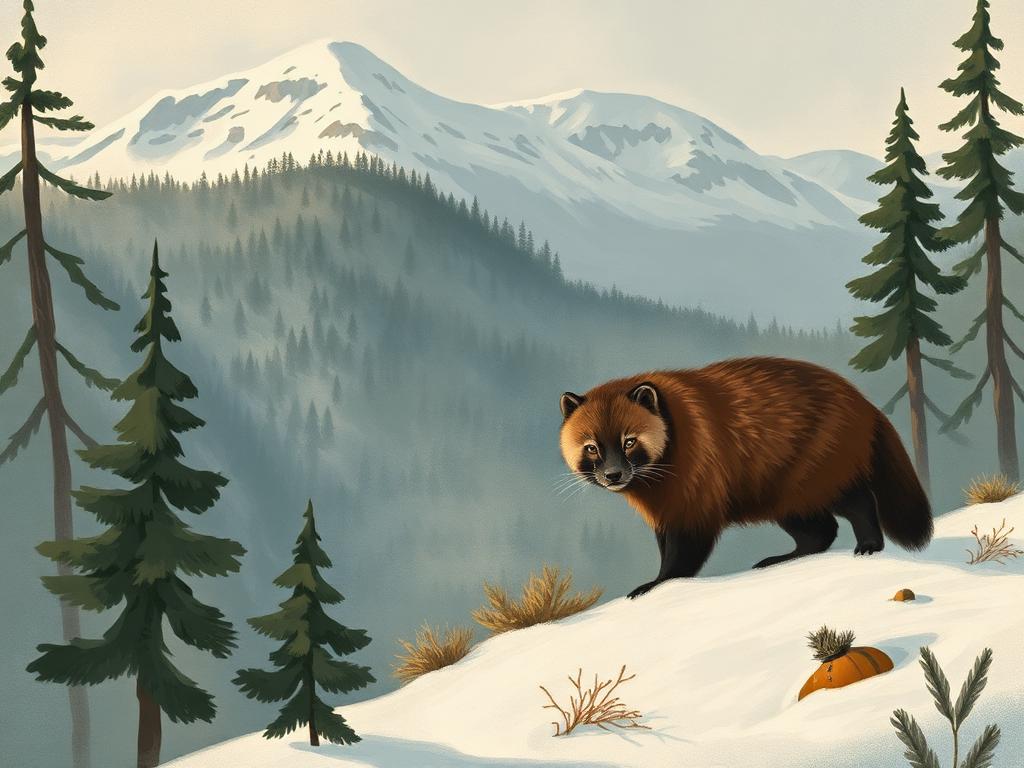
The wolverine (Gulo gulo), known as järv in Swedish, is one of Scandinavia's most powerful and elusive predators. Despite its relatively small size, the wolverine is renowned for its extraordinary strength, tenacity and ability to survive in some of the harshest environments on earth. It is the largest land-dwelling member of the mustelid family, which also includes otters, badgers and martens.
Physical Description
The wolverine is a stocky, muscular animal that resembles a small bear more than its weasel relatives. Adults typically weigh between 10 and 25 kilograms, with males being significantly larger than females. They measure 65 to 105 centimetres in body length, with a bushy tail of about 17 to 26 centimetres. Wolverines have broad, rounded heads with small eyes and short, rounded ears. Their fur is thick and dark brown to black, with distinctive pale yellowish-brown bands running from the shoulders along the flanks to the base of the tail. This pattern is unique to each individual. Their large paws act like snowshoes, allowing them to move efficiently across deep snow — an advantage over larger predators and prey.
Habitat
In Scandinavia, wolverines inhabit remote mountain regions and boreal forests, primarily above the treeline in the alpine zone. They are found across the Scandinavian mountain range (Scandes) from northern Sweden and Norway down into the central mountain regions. Wolverines require vast, undisturbed wilderness areas. A single male's territory can span between 500 and 1,500 square kilometres, overlapping with the territories of several females. They prefer areas with deep snow cover during winter, rugged terrain with rocky outcrops for denning, and access to prey populations.
Where to Find Wolverines in Scandinavia
Sweden is home to an estimated 600 to 700 wolverines, primarily in the mountain regions of Norrbotten, Västerbotten and Jämtland. Norway has a similar population of around 350 to 400 individuals, mostly in the northern counties of Troms and Nordland. Finland has a smaller but growing population of approximately 200 to 300 wolverines, mainly in the northern Lapland region. Wolverines are extremely difficult to observe in the wild due to their solitary nature, vast territories and preference for remote, rugged terrain.
Diet
Wolverines are opportunistic feeders with a remarkably varied diet. They are both hunters and scavengers, and their powerful jaws and teeth can crush frozen meat and bone — allowing them to feed on carcasses that other animals cannot access during the harsh Scandinavian winter. Their diet includes reindeer, mountain hares, small rodents such as lemmings, birds and bird eggs. In winter, they rely heavily on scavenging carcasses of reindeer and moose, as well as stealing kills from lynx and other predators. Wolverines are known to cache food by burying it in snow or wedging it into rock crevices, creating reserves for leaner periods.
Behaviour
Wolverines are solitary and primarily nocturnal or crepuscular. They are constantly on the move, covering large distances in search of food. Their endurance is legendary — they can travel 30 to 40 kilometres in a single day across mountainous terrain and deep snow. Breeding occurs in late spring and early summer, but wolverines exhibit delayed implantation, meaning the fertilised egg does not begin developing until the following winter. Females give birth in February or March in dens dug deep into the snow, typically producing litters of two to three kits. The kits stay with their mother for about a year before becoming independent. Wolverines are fiercely defensive of their food and have been documented driving bears and wolves away from kills. Their reputation for ferocity far exceeds what their size would suggest.
Interesting Facts
- The wolverine's scientific name, Gulo gulo, comes from the Latin word for 'glutton', reflecting its voracious appetite.
- Wolverines can climb steep cliffs and trees with remarkable agility despite their stocky build.
- Their thick, frost-resistant fur was historically prized by Arctic peoples for lining hoods and parkas, as it sheds ice crystals easily.
- A wolverine can smell prey or carrion buried under two metres of snow.
- Despite their fierce reputation, wolverines are classified as vulnerable in Scandinavia due to habitat loss and conflicts with reindeer herding.
Explore the Habitat
Learn more about the ecosystems this species calls home.