Grey Wolf in Scandinavia
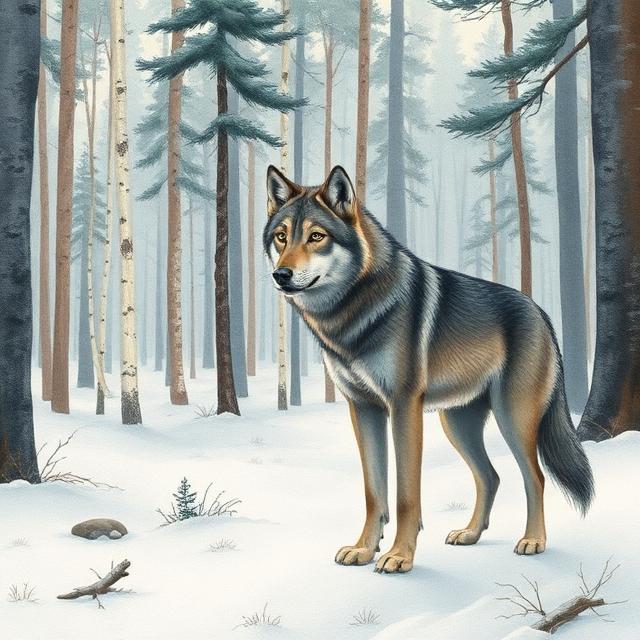
The grey wolf (Canis lupus) is one of Scandinavia's most debated and iconic wild animals. Nearly eradicated from the region during the 20th century, wolves have gradually returned to the forests of Sweden, Norway and Finland. Today they remain a subject of both fascination and controversy across the Nordic countries.
Physical Description
Scandinavian grey wolves are large, powerful canines. Adult males typically weigh between 40 and 55 kilograms, while females weigh between 30 and 45 kilograms. They stand about 70 to 85 centimetres tall at the shoulder and measure up to 160 centimetres in body length, plus a bushy tail of about 40 centimetres. Their coat colour varies from grey and greyish-brown to yellowish-grey, often with darker fur along the back and lighter underbellies. Wolves have long legs relative to their body size, powerful jaws and keen senses of hearing and smell that make them effective predators.
Habitat
In Scandinavia, wolves primarily inhabit the boreal forests of central Sweden and along the Swedish-Norwegian border. The core wolf territory lies in the provinces of Värmland, Dalarna, Gävleborg and Örebro. Wolves need large territories with sufficient prey and minimal human interference. A typical wolf pack territory in Scandinavia covers between 500 and 1,500 square kilometres. They tend to avoid open agricultural land and densely populated areas.
Population and Conservation
The Scandinavian wolf population was functionally extinct by the 1960s. The current population, numbering around 400 to 500 individuals in Sweden and Norway combined, descends primarily from a few Finnish-Russian wolves that migrated westward in the 1980s and 1990s. This narrow genetic base is one of the greatest challenges for wolf conservation in Scandinavia. Inbreeding has led to health concerns, and efforts are ongoing to improve genetic diversity through natural migration from Finland and Russia. Finland has a separate population of roughly 300 wolves.
Diet
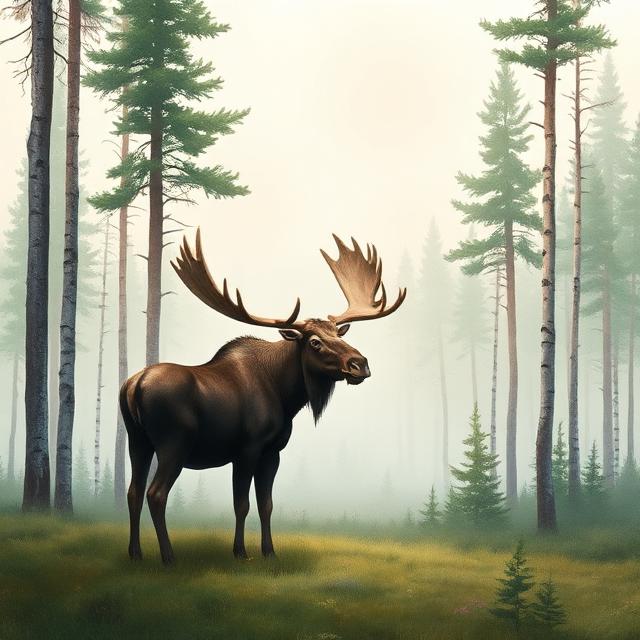
Wolves in Scandinavia feed primarily on moose, which is their main prey species. A pack may kill a moose every few days during winter, providing food for the entire group. They also prey on roe deer, red deer, and occasionally hares and beavers. Wolves are coursing predators, meaning they pursue prey over long distances rather than ambushing. They are intelligent hunters that work together, using the terrain and coordinated movements to isolate and bring down prey much larger than themselves.
Behaviour
Wolves are highly social animals that live in family groups called packs. A typical Scandinavian pack consists of a breeding pair and their offspring from the current and previous years, usually totalling 4 to 8 individuals. The breeding pair leads the pack and is responsible for most of the hunting decisions and territory defence. Wolves communicate through howling, body language and scent marking. Pups are born in April or May, with litters averaging 4 to 6 pups. Young wolves typically leave the pack at one to two years of age to find their own territory and mate.
Interesting Facts
- Wolves can travel up to 70 kilometres in a single day when searching for food or new territory.
- The howl of a wolf can be heard from up to 16 kilometres away in open terrain.
- Scandinavian wolves are genetically distinct from wolves in southern Europe due to their Finnish-Russian origins.
- Despite their fearsome reputation, there have been no confirmed fatal wolf attacks on humans in modern Scandinavia.
- Wolf packs in Scandinavia help regulate moose populations, which in turn affects forest regeneration.
Explore the Habitat
Learn more about the ecosystems this species calls home.