Moose in Scandinavia
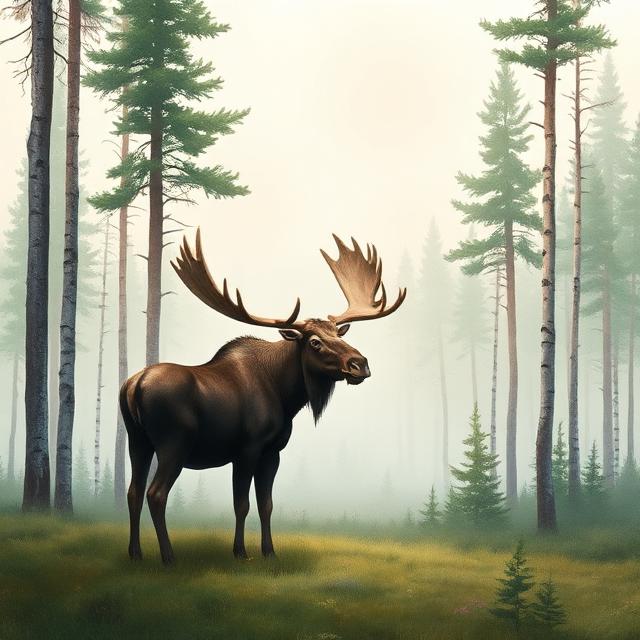
The moose (Alces alces) is the largest member of the deer family and one of the most recognisable animals of the Scandinavian wilderness. Known as 'älg' in Swedish and 'elg' in Norwegian, the moose is deeply embedded in Nordic culture and has roamed the boreal forests of northern Europe for thousands of years.
Physical Description
An adult bull moose can stand up to 2.1 metres tall at the shoulder and weigh between 380 and 700 kilograms. Cows are somewhat smaller, typically weighing between 270 and 360 kilograms. Moose have long legs, a distinctive drooping nose and a flap of skin called a dewlap hanging beneath the throat. Bulls grow large, palmate antlers each year, which can span up to 1.8 metres across. The antlers are shed in winter and regrown in spring, covered in a soft layer called velvet during growth. Their coat is dark brown to almost black, with lighter legs. This colouration helps them blend into the shadows of the boreal forest. Their long legs are well suited for wading through deep snow and across marshy ground.
Habitat
Moose thrive in the boreal forests that cover much of Scandinavia. They prefer areas with a mix of coniferous and deciduous trees, especially where young birch, willow and aspen grow in abundance. Wetlands, lake shores and river valleys are important habitats, as moose frequently feed on aquatic vegetation during summer. In Sweden alone, the moose population is estimated at around 300,000 to 400,000 individuals before the annual autumn hunt. They are found throughout the country, from the southern provinces of Småland and Skåne up to the mountains of Lapland.
Where to Find Moose in Scandinavia
Moose are widespread across Sweden, Norway and Finland. In Sweden, they are most commonly seen in the central and northern regions, particularly in the provinces of Dalarna, Gävleborg and Jämtland. Dawn and dusk are the best times to spot them, especially near forest edges, lakes and clearings. In Norway, moose are abundant in the eastern and central forested areas. Finland's moose population is concentrated in the southern and central parts of the country.
Diet
Moose are herbivores with a diet that changes significantly between seasons. In summer, they feed on the leaves of birch, rowan, willow and aspen, as well as aquatic plants such as water lilies and pondweed. They are often seen wading into lakes and rivers to reach submerged vegetation. During winter, when leafy food is scarce, moose switch to browsing on twigs, bark and the shoots of pine and spruce trees. An adult moose can consume up to 30 kilograms of food per day during summer and around 15 kilograms during winter.
Behaviour
Moose are generally solitary animals, though cows may be seen with their calves. The rutting season takes place in September and October, when bulls compete for mating rights. During this period, bulls become more aggressive and vocal, producing deep grunting sounds to attract cows. Calves are born in late May or June, usually one or two per cow. They remain with their mother for about a year before being driven away when the next calf is born. Moose are most active during dawn and dusk and tend to rest during the middle of the day.
Interesting Facts
- Moose can swim up to 6 kilometres per hour and may dive to depths of over 5 metres to reach aquatic plants.
- A newborn moose calf can outrun a human within just five days of being born.
- Moose antlers are among the fastest-growing animal tissues, growing up to 2 centimetres per day.
- The Swedish word for moose, 'älg', comes from the Old Norse word 'elgr'.
- Despite their size, moose can run at speeds of up to 56 kilometres per hour.
Explore the Habitat
Learn more about the ecosystems this species calls home.