Brown Bear in Sweden
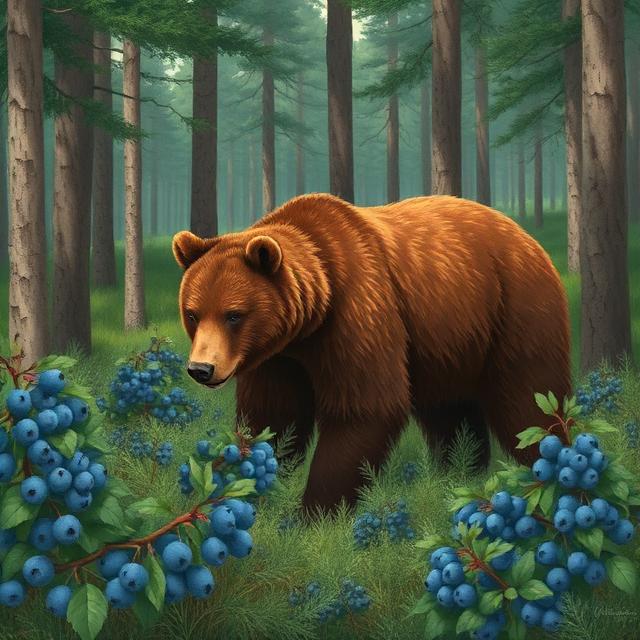
The brown bear (Ursus arctos) is Sweden's largest predator and one of the most impressive mammals of the Scandinavian wilderness. Once hunted to near extinction in the region, the brown bear population in Sweden has recovered significantly over the past century thanks to legal protection and conservation efforts.
Physical Description
Scandinavian brown bears are typically smaller than their North American relatives. Adult males weigh between 150 and 350 kilograms, while females usually weigh between 90 and 200 kilograms. They stand about 1 metre tall at the shoulder when on all fours and can reach up to 2.2 metres when standing upright. Their fur ranges from dark brown to a lighter, almost sandy colour. They have a distinctive muscular hump on their shoulders, small rounded ears and powerful claws that can grow up to 10 centimetres long. These claws are used for digging, foraging and climbing.
Habitat
Brown bears in Sweden are found primarily in the northern and central regions of the country, across the provinces of Norrbotten, Västerbotten, Jämtland, Gävleborg and Dalarna. They inhabit dense boreal forests dominated by spruce and pine, preferring areas with limited human disturbance. Bears use a variety of terrain within their home range, including dense forest for shelter, open bogs and meadows for feeding, and hillsides for denning. An adult male's home range can cover between 800 and 1,500 square kilometres.
Where to Find Brown Bears in Scandinavia
Sweden has the largest population of brown bears in Scandinavia, with an estimated 2,800 to 3,300 individuals. Norway has a smaller population of around 150 bears, mostly along the border with Sweden and Finland. Finland is home to approximately 2,000 to 2,500 bears, mainly in the eastern and central regions. Bears are shy and elusive, making them difficult to observe in the wild. Guided wildlife watching experiences in northern Sweden and Finland offer the best opportunities.
Diet
Brown bears are omnivores with a highly varied diet. After emerging from hibernation in spring, they feed on grass, roots, overwintered berries and the carcasses of animals that did not survive the winter. Ants and their larvae are an important protein source throughout the summer. In late summer and autumn, bears focus on building fat reserves for hibernation. Blueberries, lingonberries and crowberries form the bulk of their diet during this critical period. They also eat fish, small mammals, and occasionally young moose calves.
Behaviour
Brown bears are largely solitary, except for mothers with cubs. They are most active during dawn and dusk. Despite their large size, they are generally shy and avoid contact with humans. Hibernation typically begins in October or November and lasts until April or May. Bears dig dens in hillsides, under tree roots or in peat bogs. During hibernation, their heart rate drops from around 40 beats per minute to as low as 8. Females give birth to cubs during hibernation, usually in January, with litters of one to three cubs.
Interesting Facts
- Brown bears can run at speeds of up to 50 kilometres per hour over short distances.
- A bear may eat up to 40 kilograms of blueberries per day in autumn to prepare for hibernation.
- Swedish brown bears are among the most well-studied bear populations in the world, thanks to the Scandinavian Brown Bear Research Project.
- Bears have an extraordinary sense of smell and can detect food sources from several kilometres away.
- Cubs stay with their mother for about one and a half to two and a half years before becoming independent.
Explore the Habitat
Learn more about the ecosystems this species calls home.