Reindeer in the Nordic Region
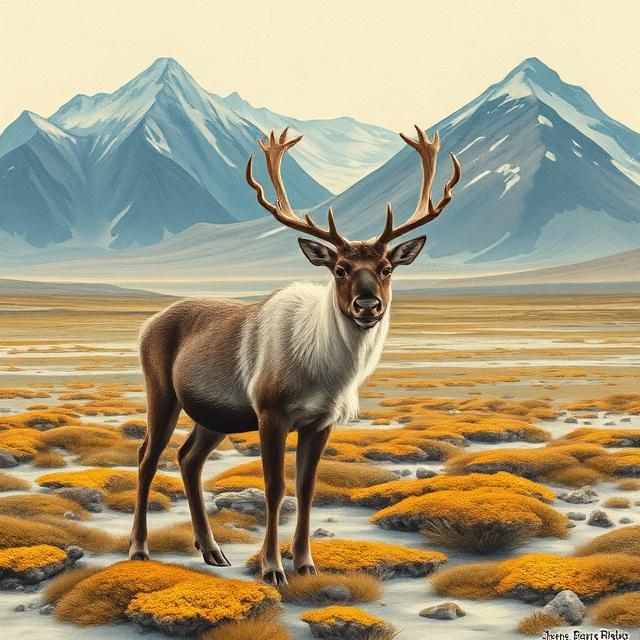
The reindeer (Rangifer tarandus) is one of the most iconic animals of the Arctic and sub-Arctic regions. In Scandinavia, reindeer have been central to the culture and livelihood of the Sámi people for thousands of years. Both wild and semi-domesticated herds roam the tundra and mountain plateaus of northern Norway, Sweden and Finland.
Physical Description
Reindeer are medium-sized members of the deer family. Adult males weigh between 90 and 210 kilograms, while females weigh between 60 and 120 kilograms. They stand about 85 to 150 centimetres at the shoulder. Uniquely among deer species, both males and females grow antlers. Male antlers are larger, reaching up to 130 centimetres in length, and are shed after the autumn rut. Female antlers are smaller and retained through winter, giving pregnant cows an advantage when competing for food under the snow. Reindeer have thick, insulating fur with hollow hairs that trap air and provide exceptional warmth. Their broad, concave hooves spread their weight on soft ground and snow and are also used for digging through snow to reach food.
Habitat
In Scandinavia, reindeer inhabit the mountain plateaus, tundra and northern boreal forests. During summer, they graze on the open mountain slopes and alpine meadows above the treeline. In winter, many herds move to lower elevations and into the forests, where snow is softer and lichen more accessible. Wild reindeer are found primarily in southern Norway, on the mountain plateaus of Hardangervidda, Rondane and other highland areas. Semi-domesticated reindeer, managed by Sámi herders, range across northern Norway, Sweden and Finland.
Distribution in the Nordic Region
Norway has the largest populations of both wild and semi-domesticated reindeer in Europe. The wild population numbers around 25,000 individuals, mainly in southern Norway. Approximately 250,000 semi-domesticated reindeer are herded by Sámi communities across Norway, Sweden and Finland. Sweden's semi-domesticated reindeer population numbers around 250,000, primarily in the northern counties. Finland has approximately 200,000 semi-domesticated reindeer in its northern Lapland region.
Diet
Reindeer are herbivores with a diet that changes dramatically between seasons. In summer, they feed on grasses, sedges, herbs, leaves and mushrooms. The abundance of food during the brief Arctic summer allows them to build up fat reserves essential for surviving the winter. In winter, reindeer depend heavily on lichens, particularly reindeer lichen (Cladonia rangiferina). They dig through snow using their hooves and muzzle to reach this vital food source. Lichens grow very slowly and overgrazed areas can take decades to recover, making sustainable herd management important.
Behaviour and Migration
Reindeer are among the most migratory of all land mammals. In Scandinavia, seasonal migrations can cover distances of up to 600 kilometres between summer mountain pastures and winter forest ranges. These movements are driven by the availability of food and the need to avoid biting insects during summer. Reindeer are highly social and form large herds, especially during migration and calving season. Calves are born in May and can stand and walk within hours of birth. The rutting season occurs in late September and October, when males compete for access to females through displays and sparring.
Interesting Facts
- Reindeer are the only deer species in which both males and females grow antlers.
- Their eyes change colour with the seasons — from golden in summer to blue in winter — to adapt to the extreme light conditions of the Arctic.
- Reindeer can detect ultraviolet light, which helps them find lichen under snow and spot predators against the white landscape.
- The clicking sound reindeer make when walking comes from tendons snapping over bones in their feet.
- Sámi reindeer herding in Scandinavia is a UNESCO-recognised cultural tradition that dates back thousands of years.
Explore the Habitat
Learn more about the ecosystems this species calls home.